

The domestic cat is a creature of profound contradiction. They are creatures of immense grace and startling clumsiness, of aloof independence and deep, heartfelt affection.
To share a home with a cat is to live alongside a fascinating enigma—one that communicates in a language of subtle blinks, slow flicks of the tail, and mysterious midnight zoomies. For centuries, their behavior has been misinterpreted, often labeled as capricious, spiteful, or unknowable.
However, modern ethology and a growing body of scientific research have illuminated the inner world of the cat, revealing a logical, instinct-driven mind beneath the furry exterior.
Understanding cat behavior is not about assigning human motives; it’s about learning to speak “Feline.” This guide delves into the core of why cats do what they do, transforming confusion into clarity and strengthening the bond between human and feline.
Part 1: The Foundation – The Cat’s Evolutionary Blueprint
To understand any modern cat’s behavior, one must first look to its past. Felis catus is a small, solitary predator whose ancestors were both hunter and hunted. This dual identity is the bedrock of nearly every feline action.
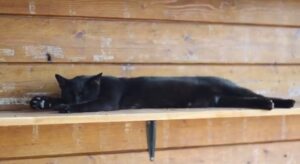
- The Solitary Hunter: Unlike pack animals like dogs or humans, cats did not evolve to live in complex social groups for survival. Their primary evolutionary strategy was solitary hunting for small prey (e.g., rodents, birds, insects). This is why:
- They Sleep So Much: Hunting is energy-intensive. Cats conserve energy by sleeping 12-16 hours a day so they are ready for explosive bursts of activity during dawn and dusk (crepuscular behavior), their natural hunting times.
- They Are Drawn to Small, Moving Objects: The skittering of a crinkle ball, the dangling of a string—these triggers mimic prey. The ensuing pounce, bat, and chase are hardwired predatory sequences. Play is, quite literally, practice for the hunt.
- They Can Be Picky Eaters: In the wild, a solitary cat cannot afford to get sick from spoiled or unfamiliar food. This instinctual caution translates into neophobia (fear of new things), especially regarding food.
- The Potential Prey: Being small, cats were also vulnerable to larger predators. This is the source of their renowned vigilance and their need for control and security.
- The Need for High Ground: A high perch offers a vantage point to spot both prey and potential threats. This is why cats love the top of bookshelves, refrigerators, and cat trees.
- Hiding: A small, enclosed space is a safe haven where a cat can retreat, recover from stress, and feel protected. This is why boxes, under beds, and hidden corners are so appealing.
- Startle Response: A sudden, loud noise or movement can trigger a frantic flight response. Their entire nervous system is wired for this quick reaction.
Understanding this hunter-prey duality is the master key to decoding feline behavior. Every action, from where they sleep to how they play, is filtered through this ancient, instinctual lens.
Part 2: Communication – The Feline Dictionary
Cats communicate with a sophisticated, multi-channel system involving body language, vocalizations, and scent. Learning to “read” this language is the most important step in understanding your cat.
- Body Language: The Primary Channel
A cat’s posture, tail, eyes, and ears tell a vivid story.
- The Tail:
- Straight Up with a Quiver: A happy, confident greeting. Often seen when a cat greets a favored human or another cat. The quiver is a sign of extreme excitement and friendliness.
- Question Mark or Hook: A playful, curious mood.
- Low or Tucked: Insecurity, fear, or submission. A tail tucked tightly between the legs signals high anxiety.
- Lashing or Thumping: Irritation, agitation, or over-stimulation. This is a clear warning to stop whatever you are doing. The faster the swish, the greater the annoyance.
- Bottlebrush (Piloerection): Fear or aggressive defensiveness. The cat is making itself look larger to intimidate a threat.
- The Ears:
- Forward and Alert: Interested, curious, and engaged.
- Swiveling: Listening to sounds from different directions, often a sign of a slightly anxious or hyper-vigilant state.
- Flattened (“Airplane Ears”): Fear, anxiety, or aggression. The cat is feeling threatened and may be ready to defend itself.
- The Eyes:
- Slow Blink: The “cat kiss.” A slow, deliberate closing of the eyes is a sign of ultimate trust, contentment, and affection. You can return this gesture to tell your cat you love them too.
- Pupils Dilated: Can indicate playfulness, excitement, or fear. Context is key. During play, it’s excitement; during a stressful event (like a car ride), it’s fear.
- Staring: A direct, unblinking stare is a challenge or a threat in the animal kingdom. This is why cats often seem uncomfortable with sustained eye contact from strangers.
- Overall Posture:
- Relaxed: Loose posture, perhaps lying on their side with belly exposed (a sign of trust, not always an invitation for a belly rub).
- The Halloween Cat: Arched back, fur standing on end, tail puffed. This is a defensive display to look bigger and scarier.
- Crouched: Low to the ground, tense. This can be a pre-pounce play posture or a fearful, submissive one.
- Vocalizations: More Than Just “Meow”
Cat behavior have a vast vocal repertoire, and interestingly, adult cats primarily “meow” to communicate with humans, not with each other.
- The Meow: A multi-purpose sound. Its meaning depends on pitch, length, and context. A short, high-pitched meow is often a friendly greeting (“Hello!”), while a long, drawn-out, lower-pitched meow is typically a more demanding request (“Feed me NOW!”).
- Purr: Most often a sign of contentment, but cats also purr when in pain, stressed, or giving birth. It is believed to be a self-soothing mechanism and may even promote bone and tissue healing through its vibrational frequency.
- Trill/Chirrup: A friendly, bird-like sound between a meow and a purr. Mother cats use it to call their kittens, and adult cats use it as a cheerful greeting to their humans, often meaning “Follow me!” or “Hello, I’m happy to see you!”
- Hiss/Growl/Snarl: Unequivocal warning sounds. They mean “Back off!” and signal fear, pain, or aggression. Heed these warnings.
- Chattering/Chittering: That strange stuttering sound a cat makes when watching a bird out the window. It’s thought to be a expression of frustrated predatory excitement.
- Scent Communication: The Invisible World
This is the most important channel for cat-to-cat communication, though it’s invisible to us.
- Cheek Rubbing: Cats have scent glands on their cheeks. When they rub their face on you, a corner of a wall, or your furniture, they are depositing their scent and marking that object, person, or area as “safe” and familiar. This is a sign of ownership and affection.
- Scratching: This is not just to sharpen claws. It is a powerful visual and scent mark. Glands in their paw pads leave behind their signature scent, claiming territory.
- Bunting: The affectionate act of head-butting is an intense form of scent marking and a sign of great trust.
Part 3: Common Behaviors Demystified
With the foundation of communication laid, we can now decode specific common behaviors.
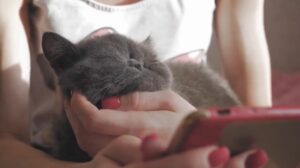
- Kneading (Making Biscuits): This rhythmic pushing with the paws is a throwback to kittenhood. kittens knead their mother’s belly to stimulate milk flow. In adulthood, it is a sign of ultimate contentment, comfort, and love. It’s a self-soothing behavior that says, “I am happy and safe.”
- The “Zoomies” (Frenetic Random Activity Periods – FRAPs): These sudden bursts of manic energy are a natural way for Cat behavior to release pent-up energy. They are most common in kittens and young cats and often occur in the evening, aligning with their crepuscular hunting instincts.
- Bringing You “Gifts”: That dead mouse or maimed toy is not a gift in the human sense. It has several potential meanings: a) A mother cat teaching her inept kitten (you) how to hunt, b) Sharing a prized kill with a valued member of their colony, or c) Simply moving their prey to a safe, familiar place (your kitchen). It is, ultimately, a sign of affection and trust.
- Knocking Things Off Counters: This frustrating behavior is a combination of curiosity (“What happens if I do this?”) and a learned attention-seeking behavior. They quickly learn that batting your car keys onto the floor results in a big, interesting reaction from you. The best way to curb it is through complete ignorance—no reaction at all—and providing more appropriate outlets for play and enrichment.
- Exposing Their Belly: This is a sign of great trust, as the belly is the most vulnerable part of a cat’s body. However, it is rarely an invitation for a belly rub. For many cats, it’s a display of trust that is quickly violated if touched, often resulting in a grab, bite, and rabbit-kicks. Interpret it as a compliment, not an offer.
Part 4: “Problem” Behaviors: Identifying the Root Cause
What humans label as “problem” behaviors are almost always a cat expressing a natural need in an undesirable way or a symptom of an underlying issue.
- Inappropriate Scratching: This is not spite. It’s natural Cat behavior. The solution is not declawing (a cruel and debilitating amputation), but providing more appealing scratching posts (vertical and horizontal, different materials like sisal and cardboard), placing them in prominent areas, and using positive reinforcement.
- Avoiding the Litter Box: This is one of the most common issues and a major reason cats are surrendered to shelters. It is virtually never done out of spite. The causes are almost always medical or environmental:
- Medical: Urinary Tract Infection (UTI), bladder stones, arthritis, diabetes. The first step is always a vet visit.
- Environmental: The box is too dirty; the cat doesn’t like the type of litter; the box is too small or has a hood they dislike; the box is in a noisy, high-traffic area; there aren’t enough boxes (the rule is one per cat, plus one extra).
- Aggression: Aggression is always a response to a trigger. It can be fear-based, pain-induced, territorial, or redirected (e.g., agitated by an outdoor cat it can see but not reach, so it bites its owner instead). Identifying and removing the trigger is key.

- Excessive Vocalization (Yowling): Persistent, loud yowling, especially in senior Cat behavior, can be a sign of cognitive decline, disorientation, or pain (e.g., from hypertension or hyperthyroidism). In younger cats, it can be a sign of boredom, loneliness, or a learned behavior for attention. Again, a vet check is crucial.
Building a Feline-Centric Home
Understanding cat behavior is an ongoing journey of observation, empathy, and adaptation. It requires us to shed our human-centric perspectives and see the world through a feline lens—a world shaped by the instincts of a solitary hunter that chose to live with us.
By providing for their core needs—security through predictable routines and safe hiding spots, opportunities for predation through interactive play, appropriate territory with vertical space and scratching posts, and a clean, respectful environment—we can prevent most behavioral issues before they start.
A happy Cat behavior is one whose natural instincts are understood and respected. When we learn to speak their language and provide a home that honors their true nature, the enigmatic creature on our couch transforms into a confident, content, and deeply bonded companion. The enigma remains, but it becomes not a source of frustration, but a never-ending source of fascination and love.
This other amazing post, “The Ultimate Guide to Finding The Best Cat Litter”, might interest you. Check it out!
I hope you enjoyed this article, which focuses on “The Feline Enigma: A Comprehensive Guide to Decoding Cat Behavior”. You can share your thoughts and experiences with me in the comments section.