
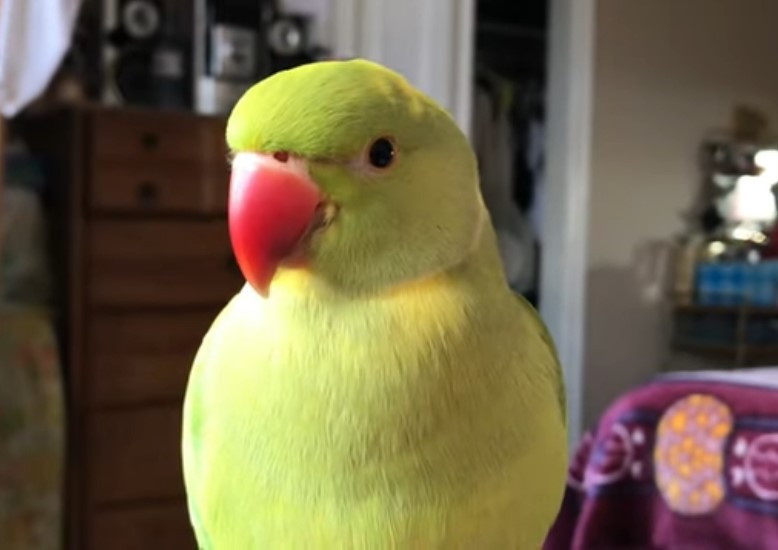
The ability of a bird to mimic human speech has fascinated humanity for centuries, from the oracle-seeking ancient Romans to the pirates of lore and modern pet owners.
A talking bird is not just a novelty; it is a testament to a deep and communicative bond between human and animal. However, the process of teaching a bird to talk is often shrouded in mystery and misconception. It is not a simple trick to be forced but a complex, patient, and rewarding journey of mutual understanding.
This in-depth guide will explore the art and science of bird talking training, moving beyond simple repetition to explore the cognitive, social, and practical nuances of unlocking your feathered friend’s vocal talents.
Part 1: Understanding the “Why” Before the “How”: The Nature of Avian Speech
Before attempting to teach a single word, it is crucial to understand why birds mimic sounds in the first place. In the wild, parrots and other talking species are flock animals. Their complex vocalizations are essential for social bonding, identifying members of their flock, signaling danger, and attracting mates. They are not simply “parroting” sounds devoid of meaning; they are mastering the dialect of their social group.
For a pet bird, you are their flock. Mimicking your speech is its way of strengthening the social bond and integrating itself into your family unit. This is a key insight: talking training is, at its core, relationship building. A bird that feels safe, secure, and loved is far more likely to want to communicate with you.
Key Factors That Influence a Bird’s Ability to Talk:
- Species: This is the most significant factor. Some species are renowned mimics, while others rarely, if ever, speak.
- Top Talkers: African Grey Parrots are often considered the gold standard for clarity and cognitive understanding. Amazon Parrots, particularly Yellow-naped and Double Yellow-headed, are eloquent and enthusiastic talkers. Budgerigars (Budgies) hold the world record for largest vocabulary of any bird; a budgie named Puck was recorded with 1,728 words! Cockatoos, Eclectus Parrots, and Indian Ringneck Parakeets are also highly capable.
- Moderate Talkers: Quaker Parrots, Conures, and Cockatiels can learn words and phrases, though often with a charmingly scratchy or unclear tone. Cockatiels are more renowned for their whistling abilities.
- Limited Talkers: Lovebirds, Parrotlets, and Macaws can occasionally learn a few words, but it is not their forte. Macaws are more likely to master impressive sound effects like laughter or coughing.
- Individual Personality: Just like humans, every bird is an individual. Even within a species known for talking, some birds may simply have no interest. One African Grey might have a vocabulary of hundreds of words, while another may prefer to mimic the microwave beep and the telephone ring. Respecting your bird’s individuality is paramount.
- Age: Young birds, particularly during their juvenile and adolescent stages, are in their prime “sensitive period” for learning sounds. This is not to say an older bird cannot learn; it may just require more patience.
Part 2: Laying the Foundation: Prerequisites for Successful Training
You cannot build a skyscraper on a weak foundation. Before you begin formal training, ensure these critical elements are in place.
- Trust and Bonding: Your bird must see you as a source of positivity, not stress. Spend weeks or even months simply building a relationship. Hand-feeding treats, speaking softly, and respecting its boundaries are essential. A scared or stressed bird will not be receptive to learning.
- Health and Habitat: A bird that is unwell or living in an inadequate environment will not be motivated to learn. Ensure your bird has:
- A spacious, clean cage.
- A balanced, nutritious diet (pellets, fresh veggies, and limited seeds).
- Plenty of toys for mental and physical stimulation.
- 10-12 hours of uninterrupted sleep each night in a quiet, dark room.
- Regular veterinary check-ups.
- The Right Mindset: Patience, Consistency, and Positivity: This is a marathon, not a sprint. Some birds may pick up a word in days, others in months. Consistency in your training routine and an endlessly positive, encouraging attitude are your most powerful tools. Never show frustration or anger.
Part 3: The Training Toolkit: Methods and Techniques
With a strong foundation, you can begin incorporating training techniques into your daily interactions.
- The Power of Context and Association:
Birds are brilliant at associating words with actions, objects, or emotions. This is how they often assign meaning to the words they learn.
- Greetings: Say “Hello!” or “Good morning!” every time you enter the room or uncover the cage in the morning.
- Food: Say “Want a nut?” or “Yummy!” when offering a favorite treat. Name fruits as you offer them: “Here’s your apple.”
- Activities: Say “Step up!” every time you ask your bird to step onto your hand. Say “Wanna shower?” before misting them.
- The Direct, One-on-One Session:
Dedicate short, focused periods each day to training.
- Timing is Everything: Choose a time when your bird is alert, calm, and slightly hungry—usually in the morning before breakfast. This increases their motivation for food rewards.
- Minimize Distractions: Train in a quiet room with the TV off and other pets absent.
- Keep it Short: Sessions should be 5 to 15 minutes maximum. It’s better to have two short, positive sessions than one long, tedious one that leads to boredom.
- The Process:
- Hold your bird on your hand or a stand in front of you.
- Get its attention. Make eye contact.
- Clearly and enthusiastically say the word or short phrase you are targeting (e.g., “Hello”).
- Pause and look at your bird intently. They often get a look of concentration on their face when processing sound.
- The instant it makes any sound that even vaguely resembles the word—a click, a grunt, a peep—immediately praise lavishly (“Good bird!”) and give it a tiny, high-value treat (a piece of pine nut, a bit of almond).
- Repeat this process. The goal is to capture and reward any attempt at vocalization, gradually shaping it closer to the desired word.
- Passive Learning and Repetition:
Birds learn constantly from their environment. You can leverage this.
- Narrate Your Life: Talk to your bird throughout the day. Tell it what you’re doing as you cook, clean, or work. Your voice is a constant source of auditory input.
- Audio Recordings: While a useful supplement, recordings should be used sparingly and wisely. A loop of a single word for hours on end is boring and can lead to a bird that only talks when no one is in the room. Better to record yourself having a short, cheerful conversation with pauses, as if you were talking to the bird directly. Play this for no more than an hour or two a day.
Part 4: Advanced Techniques and Vocabulary Building
Once your bird has mastered its first word, a new world of possibility opens up.
- Building on Success: Use a known word as a launchpad. If your bird says “Hello,” you can add “How are you?” right after. They may start to chain the phrases.
- Teaching Names of Objects: Hold up a key, say “Key,” and reward any vocal attempt. You can do this with a ball, a cup, a shoe, etc. This moves beyond simple mimicry towards labeling, a higher cognitive function famously demonstrated by Dr. Irene Pepperberg’s work with Alex the African Grey.
- Teaching Songs and Tunes: For birds inclined to whistle, this can be easier than words. Whistle a simple, consistent tune (like the beginning of “Twinkle Twinkle Little Star” or the Andy Griffith theme) and reward any attempt to replicate it. Use the same shaping process as with words.
Part 5: Troubleshooting Common Challenges
- My Bird Isn’t Talking: First, ensure you’ve managed your expectations based on its species and personality. Go back to the foundation: is your bird happy and healthy? Are you being consistent and patient? Sometimes, switching the target word can help. “Hello” might not be interesting, but “Peekaboo!” or the sound of a kiss might be.
- My Bird Mumbles or Is Unclear: Enunciate very clearly when you train. Slow down. Sometimes, birds practice a word quietly and unclearly for weeks before suddenly shouting it out with perfect clarity. Keep rewarding the attempt.
- My Bird Only Talks When I’m Not in the Room: This is common and often a result of overusing passive recordings. To counter it, when you hear your bird talking from the other room, immediately go to it, offer praise and a treat, and engage with it. This helps it associate talking with your positive social presence.
- My Bird Learned a Word I Don’t Like!: This is a critical lesson: be mindful of what you say around your bird. They are excellent at picking up words said with high emotion, including curse words yelled in frustration. Unfortunately, once a word is learned, it is very difficult to un-teach. The best strategy is to ignore the unwanted word completely (no reaction—positive or negative—is a reaction) and massively reward the words you do want to hear.
Part 6: Beyond Words: The Ethics and Responsibilities of a Talking Bird
Owning a talking bird is a tremendous responsibility that goes beyond teaching it party tricks.
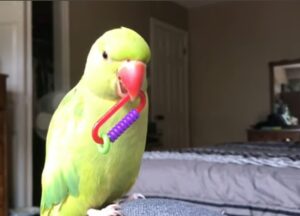
- Cognitive Enrichment: A talking bird is a smart bird that needs constant mental stimulation. Training is a fantastic form of enrichment, but it must be part of a larger strategy that includes foraging toys, puzzle feeders, and regular out-of-cage time.
- Social Interaction: These are not solitary animals. A talking bird is seeking to interact with you. If you teach it to talk, you have a responsibility to engage in “conversation” with it every single day. Ignoring a vocal, social creature is profoundly cruel and can lead to behavioral and psychological issues like feather plucking and screaming.
- The Lifelong Commitment: Many talking bird species can live for 50, 60, or even 80 years. Teaching them to talk deepens a bond that you must be prepared to honor for its entire life, which may well outlast your own. It is a commitment that must not be entered into lightly.
The Reward of a Shared Language
Training a bird to talk is a journey of patience, observation, and celebration. The goal is not to create a feathered recording device but to forge a deeper, more meaningful channel of communication with another intelligent being. The first time your bird looks at you and offers an unsolicited “I love you” or greets you at the door with a cheerful “Hello!”, the months of effort will feel微不足道 (wēi bù zú dào – insignificant).
It is a moment of pure connection, a bridge built between species through consistent care, positive reinforcement, and mutual respect. Embrace the process, celebrate every squeak and murmur along the way, and enjoy the incredible privilege of conversing with one of nature’s most articulate and fascinating creatures.
This other amazing post, “Pawsome Play: The Ultimate Guide to DIY Dog Toys for a Happier, Healthier Hound”, might interest you. Check it out!
I hope you enjoyed this article, which focuses on “The Articulate Avian: A Comprehensive Guide to Unlocking Your Bird’s Speaking Potential”. You can share your thoughts and experiences with me in the comments section.