

Diseases in Cats, like humans, can suffer from a variety of food-related skin conditions. Although food allergies or intolerances are often the main culprits behind skin issues in felines, other factors such as food quality, ingredients, and environmental elements can also contribute.
Identifying and understanding the causes and symptoms of these food-related skin conditions can significantly improve a cat’s quality of life.
This article will discuss the most common food-related skin diseases in cats, how to recognize them, and strategies for prevention and treatment.
1. Food Allergies: The Leading Cause of Skin Issues in Diseases in Cats
One of the primary reasons for skin problems in Diseases in Cats is food allergies. Food allergies occur when a cat’s immune system mistakenly identifies a specific ingredient as harmful, triggering an immune response. This reaction often manifests in the form of skin irritation, inflammation, and itching.
Common Food Allergens in Cats:
- Animal Proteins: Beef, chicken, fish, and dairy are some of the most common allergens for cats.
- Grains: Corn, wheat, and soy can also cause allergies, although they’re less common in cats compared to dogs.
- Food Additives: Artificial colors, flavors, and preservatives in commercial cat food can sometimes contribute to allergic reactions.

Symptoms of Food Allergies:
- Itchy Skin: Diseases in Cats with food allergies often exhibit intense itching, especially around the face, ears, and neck.
- Hair Loss and Skin Lesions: Persistent scratching can lead to hair loss, open sores, and scabs, particularly in areas they can reach with their claws.
- Gastrointestinal Issues: While skin symptoms are common, food allergies can also cause vomiting or diarrhea in some cats.
Diagnosis and Treatment:
Diagnosing food allergies in cats typically involves an elimination diet, where the suspected allergens are removed from the diet, and novel proteins (like duck or venison) are introduced instead. Once the symptoms subside, ingredients can be reintroduced one at a time to determine which specific food triggers the allergic reaction. If a specific allergen is identified, it’s best to avoid it in their diet permanently. In some cases, veterinarians may also recommend hypoallergenic or limited-ingredient cat food.
2. Food Intolerances: Different from Allergies but Equally Troublesome
Food intolerances differ from allergies in that they don’t involve an immune response. Instead, intolerances are more likely due to a cat’s inability to digest certain foods properly. While they often cause gastrointestinal symptoms, food intolerances can also lead to skin issues.
Common Food Intolerances:
- Dairy Products: Many cats are lactose intolerant, as they lack the enzyme needed to digest lactose, a sugar found in milk and dairy products.
- Certain Proteins: Even without an immune response, some proteins like chicken or beef may be difficult for certain cats to digest, leading to skin issues and discomfort.
- Preservatives and Additives: Artificial ingredients, often found in low-quality cat foods, can cause digestive upset and, indirectly, skin problems.
Symptoms of Food Intolerance:
- Skin Irritation and Itching: Although less common than with allergies, food intolerances can lead to mild itching and inflammation.
- Digestive Problems: These include vomiting, diarrhea, and flatulence, which can indirectly affect the skin due to nutrient malabsorption.
- Changes in Coat Quality: Diseases in Cats with intolerances may experience dull or brittle fur, as they’re unable to properly absorb essential nutrients.
Treatment:
The primary way to address food intolerances is to avoid the offending ingredient. This can be achieved by carefully reading food labels and selecting foods that don’t contain the problematic ingredient. Unlike allergies, food intolerances may not require a full elimination diet but can often be managed through careful diet adjustments.
3. Nutritional Deficiencies: An Overlooked Cause of Skin Issues
Nutritional deficiencies can lead to a variety of skin problems, as Diseases in Cats rely on a balanced diet to maintain healthy skin and fur. Cats are obligate carnivores, meaning they require a diet rich in animal proteins and certain essential nutrients that they cannot synthesize on their own. Low-quality cat food or unbalanced homemade diets can lead to deficiencies that manifest in the skin and coat.
Common Nutritional Deficiencies in Cats:
- Taurine: An amino acid essential for heart and eye health, taurine is also important for healthy skin and fur. Cats cannot produce taurine on their own and rely on their diet to provide this nutrient.
- Omega-3 and Omega-6 Fatty Acids: These essential fatty acids support skin elasticity, hydration, and a shiny coat. Deficiencies can result in dry, flaky skin.
- Zinc: This mineral supports cell regeneration and immune function, both of which are essential for healthy skin. Zinc deficiency can lead to skin lesions and hair loss.
Symptoms of Nutritional Deficiencies:
- Dull, Brittle Coat: A lack of essential nutrients can cause the fur to lose its natural shine and softness.
- Flaky or Scaly Skin: Omega fatty acid deficiencies can lead to dry, flaky skin, which is often visible on the cat’s back or near the tail.
- Hair Loss: In severe cases, deficiencies can lead to patchy hair loss and slow regrowth.
Treatment:
Providing a high-quality, balanced diet that meets a cat’s nutritional needs is key to preventing deficiencies. Supplementing with omega fatty acids or other specific nutrients may help, but always consult a veterinarian before adding any supplements to your cat’s diet.
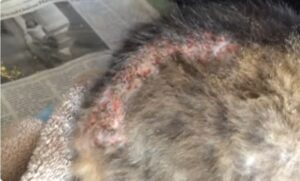
4. Dermatitis and Skin Infections Due to Food Reactions
Dermatitis, an inflammation of the skin, can result from food allergies, intolerances, or poor-quality food that doesn’t support skin health. This condition can lead to red, irritated skin that may become infected if left untreated.
Types of Dermatitis Linked to Food:
- Allergic Dermatitis: Caused by an allergic reaction to a specific food ingredient, allergic dermatitis results in red, itchy, and inflamed skin.
- Contact Dermatitis: While more commonly linked to environmental allergens, contact dermatitis can sometimes be triggered by food that causes a topical reaction when the cat grooms themselves.
- Secondary Infections: Prolonged scratching or licking can lead to bacterial or fungal infections, which exacerbate dermatitis and make treatment more complex.
Symptoms of Dermatitis Diseases in Cats:
- Redness and Swelling: Inflamed patches of skin are a hallmark of dermatitis.
- Excessive Licking or Scratching: Cats with dermatitis may groom excessively in an attempt to relieve itching.
- Sores and Scabs: Continuous scratching can lead to open sores, which may develop scabs if they start to heal or become infected.
Treatment:
Treating dermatitis often involves eliminating the underlying allergen or irritant and using topical treatments or prescribed medications to manage inflammation and itchiness. In cases of infection, antibiotics or antifungal treatments may be required. A switch to a hypoallergenic diet or limited-ingredient cat food can help reduce the risk of recurring dermatitis due to food.
5. Seborrhea: Caused by Poor Diet Quality Diseases in Cats
Seborrhea is a skin condition characterized by excessive oil production, which can lead to a greasy coat and dandruff. While seborrhea can be genetic, poor-quality diet and insufficient nutrition often play a role in worsening the condition.
Symptoms of Seborrhea:
- Greasy or Oily Skin: Seborrhea leads to an overproduction of sebum, resulting in greasy skin that feels oily to the touch.
- Dandruff: Seborrhea often causes flaking, leading to visible white flakes on the skin and fur.
- Odor: Seborrheic skin can develop an unpleasant odor due to bacterial or yeast overgrowth.
Treatment:
Improving diet quality by providing high-quality, nutrient-dense food can help manage seborrhea. Omega-3 and omega-6 fatty acids are particularly beneficial, as they support healthy skin oil production. In more severe cases, medicated shampoos and topical treatments may be needed to control symptoms.
6. Preventing Food-Related Skin Issues in Diseases in Cats
Preventing skin issues often requires proactive measures that focus on providing high-quality nutrition and carefully monitoring your cat’s reaction to their diet. Here are some tips to reduce the risk of food-related skin problems:

- Feed High-Quality Food: Opt for cat food that is free from fillers, artificial ingredients, and common allergens. Look for products that list a high-quality protein as the primary ingredient.
- Introduce New Foods Gradually: Abrupt dietary changes can upset a cat’s digestive system and cause skin issues. If you’re switching foods, do it gradually over a week by mixing the new food with the old.
- Monitor for Symptoms: Keep an eye out for signs of food-related skin issues, such as excessive scratching, hair loss, or dull fur. Early detection can make treatment more effective.
- Consult a Veterinarian: If you suspect a food allergy or intolerance, consult your vet to design a suitable elimination diet. They can also provide guidance on balanced nutrition and recommend suitable supplements if necessary.
Food-related skin diseases in cats can range from mild irritations to more severe conditions that impact their quality of life. By understanding the common causes, symptoms, and treatments for these conditions, you can help ensure your cat stays comfortable, healthy, and itch-free. Prioritizing a balanced diet, monitoring for symptoms, and consulting a veterinarian as needed are key steps to maintaining your cat’s skin and overall health.
This Other Extraordinary Post “Special Diets for Dogs with Sensitive Skin: A Comprehensive Guide” May Interest You Come In and Check It Out!!!
I hope you enjoyed the publication of this article emphasizing “Common Food Related Skin Diseases in Cats”. You can share your opinions and experiences with me in the comments section.