
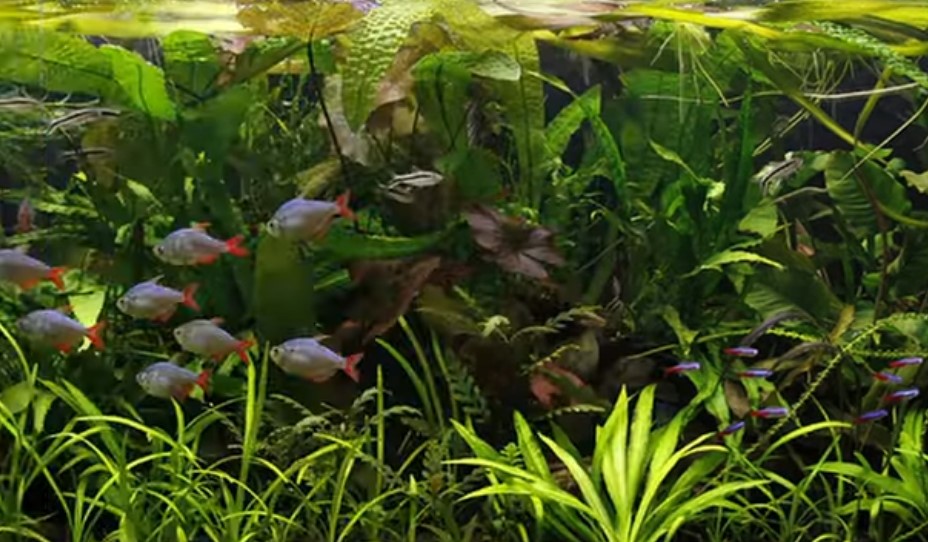
The art of Aquascaping ideas mere fishkeeping. It’s a creative pursuit where nature, design, and patience converge to create breathtaking underwater landscapes.
More than just a tank with plants, an aquascape is a living, breathing piece of art that evokes emotion and brings a slice of the aquatic world into your home. Whether you’re a seasoned aquarist or a curious beginner, finding the right inspiration is the first step to creating your own masterpiece.
This guide will explore ten captivating Aquascaping ideas, from the meticulously ordered Dutch style to the rugged beauty of a mountain stream biotope. We’ll delve into the core principles, key hardscape materials, plant choices, and the philosophy behind each style to help you find the perfect vision for your aquarium.
1. The Nature Aquascaping ideas Style (Takashi Amano Style)
Inspired by: Lush terrestrial landscapes, forests, and meadows.
Concept: Pioneered by the legendary Takashi Amano, the Nature Aquarium style seeks to replicate the beauty and harmony of natural landscapes in miniature. It’s not about copying a specific underwater scene but rather evoking the feeling of nature itself. This style heavily emphasizes the “Golden Ratio” and the “Rule of Thirds” to create a sense of balance and depth.
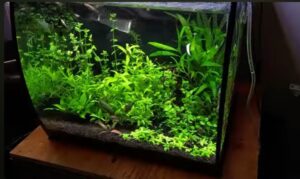
- Key Hardscape: Seiryu stone, Ryuoh stone, Manten stone, and driftwood (especially Spiderwood and Malaysian Driftwood) are staples. The hardscape forms the skeleton of the entire layout.
- Plant Selection: A diverse mix of plant species is used to create layers and textures. This often includes:
- Carpeting Plants: Hemianthus callitrichoides ‘HC’ (Dwarf Baby Tears), Glossostigma elatinoides, Eleocharis parvula (Dwarf Hairgrass) to create “lawns.”
- Mid-Ground Plants: Various Cryptocoryne species, Bucephalandra, and Anubias nana attached to hardscape.
- Background Plants: Stem plants like Rotala rotundifolia, Hygrophila pinnatifida, and Ludwigia repens to add height and color.
- Focal Point: A beautifully arranged piece of driftwood or a striking stone formation acts as the main focal point, often off-center for a dynamic feel.
- Best For: Those who appreciate artistic expression, have experience with high-tech planted tanks (CO2 injection, high lighting, fertilization), and enjoy meticulous maintenance.
2. The Iwagumi Style
Inspired by: Japanese rock gardens (Zen gardens).
Concept: Iwagumi is the epitome of minimalism and serenity. Founded on ancient Japanese principles, this style uses a carefully selected odd number of stones (usually three) to create a layout that is both simple and profoundly powerful. The goal is to evoke a sense of peace, balance, and timelessness.
- Key Hardscape: The stones are everything. They have specific names:
- Oyaishi (Main Stone): The largest and most dominant stone, placed off-center.
- Fukuishi (Secondary Stone): Supports the main stone but is smaller.
- Soeishi (Tertiary Stone): Adds depth and complements the main pair.
- Suteishi (Sacrificial Stone): A small stone used sparingly to enhance the composition without drawing attention.
- Plant Selection: The plant life is deliberately subdued to keep the focus on the stones. A single species of carpeting plant, such as Dwarf Hairgrass or Monte Carlo (Micranthemum ‘Monte Carlo’)*, is almost always used to represent a vast, rolling plain or a calm body of water.
- Livestock: Small, schooling fish like Celestial Pearl Danios, Chili Rasboras, or Rummy-nose Tetras are preferred. Their synchronized swimming adds a dynamic element without disrupting the layout’s tranquility.
- Best For: Purists, minimalists, and those who seek a challenge. Achieving a perfect balance with so few elements is deceptively difficult.
3. The Dutch Style
Inspired by: Terrestrial flower gardens.
Concept: Predating the Nature Aquarium Ideas style, Dutch aquascaping is the horticultural masterpiece of the aquascaping world. It focuses almost exclusively on the beauty, color, and texture of aquatic plants. Hardscape (stones and wood) is minimal or entirely absent. The layout is defined by its use of “streets” (negative space pathways), contrasting leaf shapes, and vibrant reds and greens placed in terraced groups.
- Key Hardscape: None or very little.
- Plant Selection: This is the heart of the Dutch style. A successful Dutch aquascape uses a vast number of species (often 15+), but with strict rules:
- Terraced Groups (Dutch “Bushes”): Plants are arranged in distinct, densely planted groups, each consisting of one species.
- Contrast: Groups are placed next to each other to maximize contrast in color (red next to green) and leaf shape (fine-leaved next to broad-leaved).
- The “Street”: A central open pathway that recedes into the background, creating an immense sense of depth.
- Maintenance: Requires extremely high maintenance, including frequent pruning, precise fertilization, and expert-level plant knowledge.
- Best For: Plant enthusiasts and aquarists who enjoy the science of plant growth and have a talent for meticulous gardening.
4. The Jungle Style
Inspired by: Untamed, overgrown tropical rainforests.
Concept: The antithesis of the minimalist Iwagumi, the Jungle style is wild, chaotic, and beautifully unkempt. The goal is to create a dense, thriving ecosystem that looks completely natural and requires less precise maintenance than other styles. It’s forgiving for beginners and incredibly rewarding.
- Key Hardscape: Driftwood and rocks are used, but they are often eventually hidden by the explosive plant growth.
- Plant Selection: Fast-growing, hardy, and robust plants are key. Think Vallisneria, Hygrophila polysperma, Java Fern, Amazon Sword, Water Wisteria, and Hornwort. The idea is to let them grow freely, intertwining and creating a dense thicket.
- Layout: There are few formal rules. Plants are allowed to grow to the surface, and the hardscape provides structure beneath the green canopy. It offers a fantastic hiding place for shy fish and shrimp.
- Best For: Beginners, those with low-tech setups (no CO2), and anyone who loves a lush, wild look without the pressure of constant trimming.
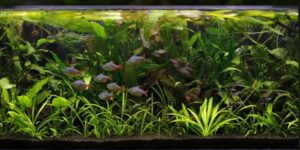
5. The Biotope Aquarium
Inspired by: A specific, real-world geographical location.
Concept: This is the most authentic and educational style of Aquascaping ideas. The aim is to recreate a specific underwater habitat as accurately as possible.
This includes using only the fish, plants, substrate, and hardscape materials (e.g., specific wood and stone) found in that single location, such as the Rio Negro riverbank or a Southeast Asian stream.
- Key Hardscape: Must be authentic to the chosen location. For an Amazonian blackwater biotope, this would mean driftwood like Mopani, leaf litter (Catappa leaves), and no rocks typical of other regions.
- Plant & Livestock Selection: Rigorous research is required. A Southeast Asian biotope might feature Boraras brigittae and specific Cryptocoryne species, while a Lake Tanganyika biotope would feature cichlids and shelly substrates with rock piles.
- Water Parameters: The water chemistry (pH, hardness, temperature) should also mimic the natural environment.
- Best For: Purists, naturalists, hobbyists who love research, and those who find beauty in ecological accuracy.
6. The Walstad Method (Natural Planted Tank)
Inspired by: Self-sustaining natural ecosystems.
Concept: Developed by Diana Walstad, this method focuses on creating a balanced, low-maintenance tank where plants and fish coexist symbiotically. It uses a soil-based substrate capped with gravel to provide nutrients for plants, which in turn filter the water for the fish. CO2 injection and frequent water changes are typically avoided.
- Key Hardscape: Any natural hardscape can be used, but the focus is on the functionality of the substrate.
- Plant Selection: Fast-growing, hardy plants are essential to consume nutrients and keep algae at bay. Stem plants, floating plants, and robust species like Java Fern are ideal.
- Maintenance: Very low-tech and low-maintenance once established. It’s more about creating a stable ecosystem than a highly manicured look.
- Best For: Beginners, hobbyists interested in ecology, and those wanting a low-tech, sustainable aquarium.
7. The Island Style (Mid-Driftwood Focus)
Inspired by: A solitary tree on a hill or a remote island.
Concept: A sub-style that is simple yet incredibly effective. A single, striking piece of driftwood (or a small group) is placed directly in the center or just off-center of the tank.
Plants are typically attached to the wood (like Anubias or Java Moss), and a carpeting plant surrounds the base, making the wood appear like a central tree or island.
- Key Hardscape: One spectacular, branching piece of driftwood (Spiderwood or Manzanita work perfectly).
- Plant Selection: Epiphyte plants attached to the wood and a simple carpet around it (Monte Carlo or Dwarf Hairgrass). The background is often kept empty or with very low-growing plants to emphasize the “island.”
- Best For: Beginners and intermediate aquascapers looking for a strong, simple focal point that is easy to maintain and creates a powerful visual impact.
8. The Mountain Stream (Sanzon Iwagumi)
Inspired by: Mountainous landscapes and flowing streams.
Concept: An evolution of the Iwagumi style, the Sanzon Iwagumi (“Three Mountain” Iwagumi) specifically represents a mountainous landscape. It uses taller, more vertical stones to mimic mountain peaks.
The substrate is often sloped significantly from back to front, and the flow from the filter outlet is used to simulate a gentle stream current.
- Key Hardscape: Tall, sharp, jagged stones like Seiryu stone or similar. The three-main-stone principle of Iwagumi is followed.
- Plant Selection: Very minimal. Often limited to small carpeting plants around the base of the stones and maybe some tiny epiphyte plants like Bucephalandra on the stone itself to simulate alpine shrubs.
- Livestock: Fish that enjoy current, like White Cloud Mountain Minnows or Hillstream Loaches, add to the authenticity.
- Best For: Those who love the Iwagumi aesthetic but want a more topographically dramatic scene.
9. The Wabi-Kusa Style
Inspired by: Emergent terrestrial growth at the water’s edge.
Concept: Originally developed by Takashi Amano, Wabi-Kusa is a unique form of Aquarium Ideas that involves balls of substrate (soil) planted with emergent and aquatic plants.
These are placed in a shallow bowl or tank, partially submerged. The plants grow both underwater and, most importantly, out of the water, creating a beautiful fusion of aquatic and terrestrial gardening.
- Key Hardscape: Often minimal, sometimes just the Wabi-Kusa balls themselves.
- Plant Selection: Plants that can grow emersed (above water) are key. This includes many common aquarium plants like Hemianthus callitrichoides ‘HC’, Hydrocotyle tripartita, Eleocharis, and mosses. They often grow more vigorously and flower out of water.
- Maintenance: Requires frequent misting to keep the emersed plants humid until they adapt.
- Best For: A beautiful, compact desktop garden for plant lovers and those looking for a unique challenge.
10. The Paludarium
Inspired by: Riverbanks, marshes, and waterfalls.
Concept: A paludarium is a hybrid vivarium that combines both water and land sections. It’s the most diverse style, allowing for the keeping of aquatic animals alongside terrestrial plants, amphibians, and even reptiles. A waterfall flowing from the land section into the water is a common and stunning feature.
- Key Hardscape: Construction is key. Using egg crate light diffuser, pond foam, and cork bark to create the landmass is standard practice. Driftwood and rocks help create a natural look.
- Plant Selection: A mix of true aquatic plants, semi-aquatic plants (like Pothos and Peace Lily with roots in water), and humidity-loving terrestrial plants (like mosses and ferns).
- Livestock: Can include fish, shrimp, crabs, frogs, salamanders, and geckos, depending on the design.
- Best For: Advanced hobbyists who want to create a complex, multi-faceted ecosystem and enjoy construction projects.
Getting Started with Your Aquascape: Essential Tips
No matter which idea captivates you, a few universal principles will set you up for success:
- Plan Your Layout: Sketch your idea on paper. Use Aquascaping ideas software or even just a rough drawing to plan the placement of your hardscape.
- Choose Your Substrate Wisely: For planted tanks, an active substrate or soil (like ADA Aquasoil, Fluval Stratum) is ideal for root growth and providing nutrients. Inert substrates like sand or gravel require root tabs for fertilization.
- Invest in Good Lighting: Plants need light to photosynthesize. Research the light requirements of your chosen plants and select a LED light that can provide the right intensity and spectrum.
- Consider CO2 Injection: While low-tech tanks are possible, injecting pressurized CO2 is the single biggest factor for achieving lush, dense, and healthy plant growth, especially for advanced styles like Nature Aquarium or Dutch.
- Be Patient: An aquascape is not built in a day. It takes weeks for plants to root and fill in. Algae blooms are common in the first few weeks (the “ugly phase”); stay consistent with maintenance, and your tank will balance out.
Your Underwater Canvas Awaits
Aquascaping is a deeply rewarding journey that blends art, science, and nature. From the serene minimalism of an Iwagumi to the wild abundance of a Jungle tank, there is a style to match every personality and skill level.
Don’t be afraid to start simple, learn from the process, and let your own creativity guide you. Use these aquascaping ideas as a springboard, and soon you’ll be on your way to crafting a stunning underwater world that is uniquely yours.
This other amazing post, “The Avian Gourmet: A Comprehensive Guide to Bird Diet and Nutrition for Optimal Health”, might interest you. Check it out!
I hope you enjoyed this article, which focuses on “10 Inspiring Aquascaping Ideas to Transform Your Aquarium into a Living Artwork”. You can share your thoughts and experiences with me in the comments section.